

Preventing Forklift Truck Incidents
- KSH Safety Services

- Aug 8, 2025
- 3 min read
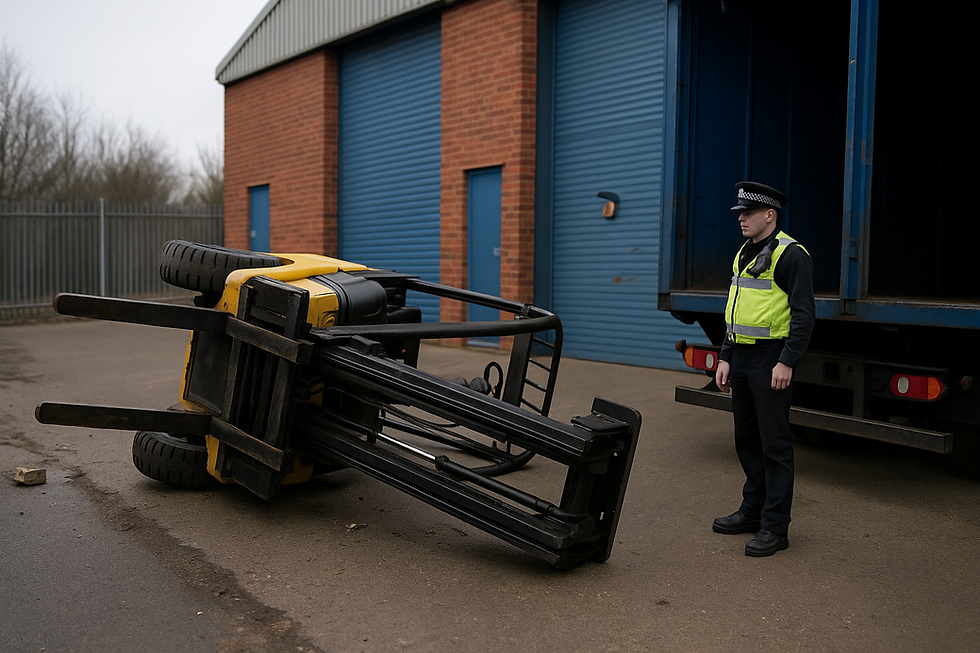
Forklift trucks are essential in many UK workplaces, particularly in warehouses, construction sites, and manufacturing plants. However, they also pose significant risks if not operated safely. According to the Health and Safety Executive (HSE), forklift-related incidents cause serious injuries and even fatalities each year. Many of these accidents are preventable with proper training, maintenance, and safety protocols.
So what are the key strategies to prevent forklift truck incidents and ensure a safer working environment?
Common Causes of Forklift Incidents
Before diving into prevention, it’s important to understand the most frequent causes of forklift accidents:
Lack of Proper Training – Untrained or inadequately trained operators are a major risk.
Poor Maintenance – Faulty brakes, worn tyres, or hydraulic leaks can lead to accidents.
Overloading or Improper Load Handling – Unstable loads can cause tip-overs or falling objects.
Pedestrian Collisions – Forklifts and workers sharing the same space increase the risk of accidents.
Speeding or Reckless Operation – Moving too fast or taking sharp turns can destabilise the forklift.
Poor Workplace Layout – Cluttered aisles, blind spots, and uneven surfaces contribute to hazards.
Key Strategies to Prevent Forklift Incidents
1. Ensure Proper Training and Certification
Operators must undergo thorough training from accredited providers (e.g., RTITB, NPORS, or ITSSAR).
Refresher courses should be provided every 3–5 years or after an incident.
Training should cover load handling, stability principles, and emergency procedures.
Looking for a training provider? Contact FTW Training. They are one of my clients and provide on and off site courses through the RTITB.
2. Conduct Regular Maintenance and Inspections
Forklifts should undergo daily pre-use checks (tyres, brakes, hydraulics, lights, horn).
Schedule routine professional maintenance to prevent mechanical failures.
Keep records of all inspections and repairs.
3. Implement Safe Load Handling Practices
Never exceed the rated load capacity of the forklift.
Ensure loads are secure and balanced before lifting.
Use the correct attachments for specialised loads (e.g., drum handlers, clamps).
Keep forks low to the ground while moving to improve stability.
4. Improve Workplace Safety Measures
Separate pedestrians and forklifts with marked walkways, barriers, or warning signs.
Install mirrors at blind spots and ensure adequate lighting in all areas.
Keep floors clean and free from obstructions (spills, debris, loose objects).
Enforce speed limits (typically 5 mph in warehouses).
Keep forklift keys out of the ignition when the truck is not in use to prevent unauthorised use.
5. Promote a Strong Safety Culture
Encourage workers to report hazards and near-misses.
Hold regular safety briefings to reinforce best practices.
Use warning signs, alarms, and flashing lights to alert pedestrians.
Ensure all staff (not just operators) understand forklift safety rules.
6. Follow HSE Guidelines and Legal Requirements
The Provision and Use of Work Equipment Regulations (PUWER) 1998 requires that forklifts are safe to use.
The Lifting Operations and Lifting Equipment Regulations (LOLER) 1998 applies to forklifts used for lifting.
Employers must conduct risk assessments under the Management of Health and Safety at Work Regulations 1999.
What to Do If an Incident Occurs?
Stop operations immediately and secure the area.
Provide first aid and call emergency services if needed.
Report the incident under RIDDOR (Reporting of Injuries, Diseases and Dangerous Occurrences Regulations 2013) if it’s required.
Investigate the cause and implement corrective actions to prevent recurrence.
Conclusion
Forklift accidents are preventable with the right training, maintenance, and safety measures in place. Employers and operators must work together to create a culture of safety, ensuring compliance with UK regulations and best practices.
By taking these steps, businesses can reduce risks, protect workers, and improve efficiency in forklift operations.
